
Triplex Pro Quick Take
The Zpacks Triplex Pro is a single-wall, trekking-pole, three-person DCF tent built for people whose priority is carrying the least possible weight without sleeping in a coffin. Its standout strength is the space-to-weight ratio: a genuine three-person footprint at well under a pound and a half in the Lite fabric. The main tradeoff is the one every DCF Plex tent shares, which is that you are paying flagship money for a single-wall shelter that needs trekking poles, careful staking, and condensation management. If you already hike with poles and want palatial room for two plus gear, this is close to the lightest way to get it.
Pros
- Exceptional interior volume for the weight, easily two people plus gear or a dog
- Fully waterproof PFAS-free DCF that does not sag when wet
- Symmetrical, four-door layout with peak vents and magnet toggles
- Built to survive a full long-distance thru-hike
Cons
- Very expensive, even by DCF standards
- Single-wall design means you will manage condensation on cold, damp nights
- Non-freestanding and stake-dependent, which is fussier on rock or platforms
- DCF is noisy in wind and the floor is slick
Bottom line: roughly $899, about 21.7 oz (616 g) in the Lite fabric, sleeps 3.
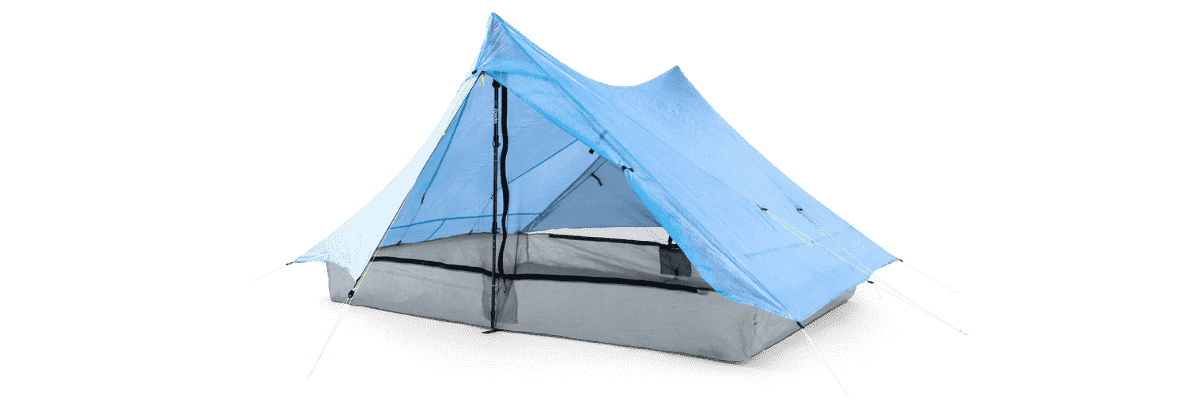
Specs at a Glance: Triplex Pro
| Spec | Detail |
|---|---|
| Price (USD) | $899 |
| Trail Weight | Lite: 616 g / 21.7 oz. Standard: 721 g / 25.4 oz |
| Packed Weight | Not listed separately by Zpacks. Add roughly 28 g / 1 oz for stuff sack, repair tape, and spare sliders |
| Capacity | 3-person (realistically a roomy 2-person plus gear, or 2 adults with a child or dog) |
| Floor Dimensions | The Triplex Classic is 90 x 60 in / 229 x 152 cm |
| Peak Height | 48 in / 122 cm (widely reported, consistent with the 48 in pole spec) |
| Packed Size | Rolled tight 6 in diameter x 12 in / 15.25 x 30.5 cm, about 340 cubic inches / 5.6 L |
| Shelter Type | Single-wall, trekking-pole supported, non-freestanding |
| DCF Canopy Weight | Lite: 0.55 oz/sqyd. Standard: 0.75 oz/sqyd |
| DCF Floor Weight | Lite: 0.75 oz/sqyd. Standard: 1.0 oz/sqyd |
| Number of Doors | 2 (each side has a zippered storm door plus a screen door, four panels total) |
| Number of Vestibules | 2 |
| Wall Construction | Single-wall DCF, no inner tent |
| Season Rating | 3-season |
| Trekking Poles Required | Yes, two poles at 48 in / 122 cm. Dedicated tent poles sold separately |
| Warranty | Limited workmanship warranty (confirm current terms with Zpacks) |
| Lead Time | Varies, often in stock. The Lite floor fabric was backordered into late May 2026 due to a supplier issue |
Zpacks Triplex Pro Design and Build Quality
The Triplex Pro is made entirely from Dyneema Composite Fabric, the laminate where ultra-high-molecular-weight polyethylene fibers are sandwiched between thin sheets of mylar. You choose between two builds. The Lite version pairs a 0.55 oz/sqyd canopy with a 0.75 oz/sqyd floor, and the Standard version steps up to a 0.75 oz/sqyd canopy with a full 1.0 oz/sqyd floor for more opacity and abrasion resistance. That single choice is the most consequential decision you will make, because it sets both the weight and the durability ceiling.
The fabric is PFAS-free and inherently waterproof, so there are no chemical coatings to wear off and nothing to re-treat over the tent’s life. Seams are factory taped, which means no seam sealing on arrival, a real convenience at this price. Guylines come pre-cut and attached with sewn-in linelocs for tool-free tensioning, and the peak lines run 72 inches with a tie-off loop for the door hooks.
The bathtub floor sits about 6 inches off the ground with 8-inch sidewalls, which is genuinely tall for an ultralight shelter and does real work keeping splashback and runoff out. Doors use zippered entry with magnet toggles for the storm panels, a meaningful upgrade over the fiddly clip systems on older Zpacks designs. Repair tape and two spare zipper sliders ship in the box. The premium price is hard to love, but the material itself is the most expensive part of any tent on the market, and the construction here is clean and considered.
Setup and Pitch of the Triplex Pro
This is where the Triplex earns its keep. The defining feature is width: where a two-person Plex tent gives you a narrow 45-inch floor, the Triplex opens up enough to fit two wide sleeping pads side by side with room left over for gear inside. For one person it is absurdly spacious. For two it feels like a luxury. For three it works if everyone is on the smaller side and packs lean.
Peak height is about 48 inches, which is tall enough to sit fully upright, change clothes, and ride out a long storm day without feeling boxed in. The near-vertical sidewall geometry is the reason the interior feels open rather than coffin-like, a common complaint with cheaper trekking-pole tents that taper sharply.
Each occupant gets their own door and their own vestibule, so nobody climbs over anybody to get out at night, and each person has covered storage for a pack and boots. Side sleepers and restless sleepers benefit most from the width. Storage inside is the weak spot: Zpacks keeps the interior minimal, so do not expect a wall of organizer pockets.
Tall sleepers should pay attention to length. A canopy that ends in steep walls can crowd a tall person’s head or foot, so anyone over about 6 feet should confirm the current floor length before buying, especially since Pro-specific dimensions are not cleanly published.
Weather Performance of the Zpacks Triplex Pro
The Triplex Pro pitches with two trekking poles set to about 48 inches (122 cm), or with Zpacks’ dedicated carbon tent poles if you do not hike with poles. There is no inner tent to fuss with, so the whole shelter goes up as one piece. Plan on 6 to 8 stakes for a normal pitch and up to 12 when wind is in the forecast. Stakes are not included, which is worth budgeting for.
The learning curve is real but short. DCF does not stretch, and that single fact changes everything about setup. Unlike silnylon, it will not sag overnight and need re-tensioning, but it also will not forgive a sloppy initial pitch. If your stake placement and pole height are off, the wrinkles stay wrinkled. The reward for getting it right is a drum-tight pitch that holds all night.
The symmetrical design is a quiet but genuine improvement. Either end can face into the wind, so you can orient the tent for the weather or the view without worrying about a dedicated front and back. On uneven or rocky ground the non-freestanding layout is fussier than a pole tent, since you are relying entirely on stakes and tension rather than a rigid frame. On wooden platforms you will want extra cord and creativity. This is not the most beginner-friendly tent on the market, and Zpacks is upfront that staking quality makes or breaks the result.
Zpacks Triplex Pro Value and Comparisons
In rain, DCF does exactly what it promises. The fabric is fully waterproof and absorbs essentially no water, so it does not get heavier as the storm goes on, and a quick shake in the morning gets most of the moisture off. The tall bathtub floor and overhanging canopy handle ground splash well, though Zpacks notes that on hard-packed surfaces in heavy rain you can still get some splash-up, and recommends camping on leaves or pine needles when you can.
Zpacks does not publish a wind rating in mph. Field reports from thru-hikers describe the Plex line riding out sustained winds in roughly the 30 to 40 mph range when pitched taut and fully staked, with stronger gusts survivable given good site selection and the full 12-stake setup. Honest framing: this is a storm-capable three-season shelter, not a mountaineering tent, and DCF is noticeably loud in high wind, enough that some people pack earplugs.
Condensation is the honest weakness of any single-wall tent, and the Triplex Pro is no exception. There is no inner wall to separate you from the fabric, so on cold, still, humid nights you will get interior moisture. The peak vents on each side and the four-door layout help a lot, and the ability to close only the upwind doors lets you balance airflow against driving rain. Manage your site choice and ventilation and condensation is a nuisance rather than a problem.
Triplex Pro Value and Comparisons
There is no getting around the price. At $899, the Triplex Pro is one of the most expensive production backpacking tents you can buy, and the closest comparisons make the decision clearer.
Zpacks Triplex Classic (about $799, roughly 21.6 oz). This is the most important comparison, because it is the same tent’s older sibling. The Classic gives you nearly identical weight and the same generous footprint for around a hundred dollars less. The Pro’s case rests on its refinements: the symmetrical pitch, zippered storm doors with magnet toggles, and the Lite fabric pairing. If those upgrades do not excite you, the Classic is the value play within Zpacks’ own lineup. Choose the Pro if you want the latest door hardware and the symmetrical, either-end-into-the-wind convenience.
Zpacks Duplex Pro (about $799, roughly 19.5 oz). The two-person Pro is lighter, cheaper, and packs smaller, but its 45-inch floor is dramatically narrower. Pick the Duplex Pro if you are a solo hiker or a tight-packing couple who never needs the width. Pick the Triplex Pro if you genuinely want room for two wide pads plus gear, or a child or dog along.
Durston X-Mid Pro 2 (about $639 to $679, roughly 18 to 20 oz). This is the value-and-design alternative. It uses an offset-pole geometry that pitches with as few as four stakes, sheds wind well, and costs meaningfully less, though it is a two-person tent and runs narrower than the Triplex. The X-Mid Pro 2 is the smarter buy for most weight-conscious couples who do not need three-person width and want easier setup.
Who should choose the Triplex Pro: thru-hikers and adventurous couples who specifically want maximum interior width at minimum weight, already hike with poles, and are willing to pay top dollar and manage DCF’s quirks. If you need three-person room in DCF with the newest Zpacks features, this is one of the only shelters that delivers it.
Triplex Pro by Zpacks FAQ
Is the Zpacks Triplex Pro waterproof in heavy rain?
Yes. The DCF canopy and floor are fully waterproof and do not absorb moisture, and the seams come factory taped, so there is nothing to seal before your first trip. Your main job is a taut pitch and a good site to limit splash-up on hard ground.
How well does the Triplex Pro hold up in wind?
It is storm-capable as a three-season tent when pitched tight and fully staked, with field reports of it handling sustained winds in the 30 to 40 mph range. It is not a four-season mountaineering shelter, and the fabric is loud in strong gusts, so set expectations accordingly.
Is the Triplex Pro hard to set up for beginners?
The pitch itself is simple, just two poles and a handful of stakes, but DCF does not stretch, so a sloppy first pitch stays wrinkled. Expect a short learning curve, and know that it relies entirely on good staking, which is harder on rock or platforms.
Does the Triplex Pro have a condensation problem?
Like all single-wall tents, it can collect interior condensation on cold, humid, still nights because there is no inner wall between you and the fabric. The two peak vents and four-door layout manage it well, so good ventilation and site selection usually keep it to a minor annoyance.
Do I need trekking poles to use the Triplex Pro?
Yes, it is supported by two poles set to about 48 inches. If you do not hike with trekking poles, Zpacks sells dedicated carbon tent poles separately, which adds cost and a bit of weight.
Can the Triplex Pro really sleep three people?
It has a true three-person footprint, but three average adults will be shoulder to shoulder with little room for gear. Most buyers use it as a spacious two-person tent with full interior gear storage, or for two adults plus a child or dog.
Will a tall person fit in the Triplex Pro?
Most hikers fit comfortably, but the walls taper toward the ends, so anyone over about 6 feet should confirm the current floor length before buying. This matters here because the Pro’s exact interior dimensions are not cleanly published.