
Altaplex Quick Take
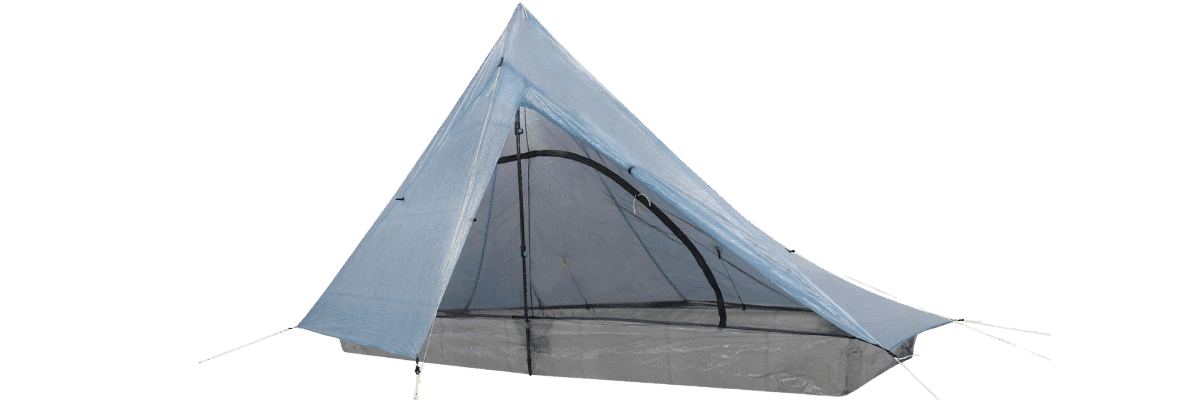
The Zpacks Altaplex is a single trekking pole DCF shelter built around one specific problem: tall hikers who want sub-pound shelter weight without sleeping with their head against the wall. Standing 56 to 58 inches at the peak and 90 inches long inside, it accommodates hikers up to 6 feet 6 inches, which is unusual territory for anything under a pound. The tradeoff is geometry. A single peak pole means steep wall angles, so a lot of that headroom is concentrated in a narrow ridge rather than spread across the floor.
You are paying $699 for one of the lightest fully-enclosed tall-hiker shelters on the market, with all the DCF benefits (zero stretch, taped seams, true waterproofness) and DCF drawbacks (bulky packed size, premium price, finite lifespan).
Pros
- Genuine 6’6″ interior length, rare at this weight
- Sub-pound trail weight (Lite version: 13.2 oz)
- Pitches with a single trekking pole and 6 to 10 stakes
- Zipperless storm doors with no failure points
Cons
- Steep walls eat into usable shoulder space
- Requires a 56 to 58 inch trekking pole, longer than most stock poles extend
- DCF packs bulky compared to silnylon competitors
- $699 to $749 is a serious investment
Bottom line: $699, 13.2 oz trail weight (Lite version), one-person capacity built specifically for tall hikers.
Specs at a Glance: Altaplex
| Spec | Value |
|---|---|
| Price (USD) | $699 |
| Trail Weight | 374 g / 13.2 oz (Lite); 467 g / 16.5 oz (Standard) |
| Packed Weight | ~392 g / 13.8 oz (Lite, with stuff sack, repair tape, and spare zippers) |
| Capacity | 1 person |
| Floor Dimensions | 90 x 40 in / 229 x 102 cm |
| Peak Height | 56 to 58 in / 142 to 147 cm |
| Packed Size | 4.5 in dia x 11 in / 11.5 x 28 cm rolled tight (~2.9 L) |
| Shelter Type | Single-wall, single-pole pyramid with full mesh inner |
| DCF Canopy Weight | 0.55 oz/sqyd (Lite) or 0.75 oz/sqyd (Standard) |
| DCF Floor Weight | 0.75 oz/sqyd (Lite) or 1.0 oz/sqyd (Standard) |
| Number of Doors | 1 (rainbow zipper screen) with 2 overlapping storm panels |
| Number of Vestibules | 1 (24 in / 61 cm deep) |
| Wall Construction | Single-wall DCF with bonded taped seams |
| Season Rating | 3 season |
| Trekking Poles Required | 1 pole, adjustable to 56 to 58 in / 142 to 147 cm |
| Warranty | 2 year limited warranty against defects |
| Lead Time | Ships in 1 to 3 business days (Spruce/Standard); Lite floor restocking late May 2026 |
Zpacks Altaplex Design and Build Quality
The Altaplex is essentially a stretched, taller version of the Plex Solo. Zpacks builds it in two material configurations, and the difference matters. The Lite version uses 0.55 oz/sqyd DCF for the canopy and 0.75 oz/sqyd DCF for the floor, dropping total trail weight to 13.2 ounces. The Standard configuration uses 0.75 oz/sqyd DCF on top with a 1.0 oz/sqyd floor, adding opacity, durability, and roughly three extra ounces.
DCF earns its reputation here. There is no DWR coating to wear out, no flame retardants, no stretch when wet, and no seam sealing required because every seam is factory bonded with tape rather than stitched and sealed.
Hardware is genuinely thoughtful. The storm doors close with custom metal hooks instead of zippers, removing the most common failure point on single-wall shelters. The rainbow zipper on the screen door is a #3 YKK, and Zpacks includes two spare sliders and a 54-inch DCF repair strip in the box. Field-replaceable zippers on a shelter you might thru-hike with is a quietly important detail.
Guyout points use LineLoc V tensioners with bright yellow 1.6 mm Z-Line cord that you can actually see at dusk. The bathtub floor sits tall and recessed from the canopy perimeter, attached by a band of mesh that breathes and lets you adjust floor tension via stretch cord.
Where you feel the premium: hardware quality, taped seams, materials, and the kind of refinement only comes from a company that has been iterating on the same single-pole geometry for over a decade.
Setup and Pitch of the Altaplex
This is where the Altaplex distinguishes itself, and where its compromises live. The 90 inch floor length is the headline number. Most one-person DCF shelters stop at 84 to 88 inches inside, which is fine for average hikers but tight for anyone over 6 feet. The Altaplex fits hikers up to 6’6″ with room for a stuff-sack pillow.
Peak height is 56 to 58 inches, depending on how you pitch it. The Trek’s reviewer, at 6 feet tall, noted that even with a standard 2.5-inch inflatable pad, he often felt close to the maximum height when sitting up. That tells you something important: a lot of that peak height is consumed once you add a sleeping pad and your torso, and the steep wall pitch means usable shoulder space is narrower than the 40 inch floor width suggests.
The 24 inch deep vestibule is generous for a one-pole shelter. You can fit a wet pack and muddy shoes underneath with one storm door closed, or open both panels for a porch view in fair weather. There is one interior mesh pocket near the peak for a headlamp or phone.
For side sleepers, the diagonal layout works well because length is not your problem. For two-person use, this is not the tent. The 40 inch floor width is one-person territory.
If you need maximum headroom, propping the side guylines on trekking pole cups can add a few inches of livable space along the walls.
Weather Performance of the Zpacks Altaplex
The Altaplex pitches with one trekking pole and a minimum of 6 stakes, though 10 stakes is the recommended setup. The pole needs to extend to 56 to 58 inches, which is longer than many stock trekking poles reach. Zpacks Carbon Fiber Trekking Poles work. So do BD Distance and Distance Z poles at full extension. If your pole tops out at 53 inches, you need a trekking pole jack or a dedicated 58 inch tent pole.
Setup goes like this: adjust pole, stake four corners at 45 degrees, insert pole at the peak, stake the front guyline, then tension the four wall tieouts. Five to seven minutes once you have the rhythm. First few attempts will take longer.
DCF does not stretch, which cuts both ways. Pitch it taut once and it stays taut all night, even soaking wet. Pitch it poorly and there is no overnight self-correction. The corners want to sit 6 to 8 inches off the ground, and getting the bathtub floor to sit level requires actually walking around the tent and adjusting. Splash-up on hard ground is a known issue, so soft ground (leaves, pine needles) protects the floor better than packed dirt.
For uneven ground, the single-pole pyramid is more forgiving than two-pole shelters because you only have one center height to balance. Beginner-friendliness is moderate. It is simpler than a Tarptent Notch, harder than a Durston X-Mid because the X-Mid has only four corners to stake for a complete pitch.
Zpacks Altaplex Value and Comparisons
For a tall, single-pole shelter with steep walls, the Altaplex performs better than you would expect in wind. Average Hiker’s reviewer reported that wind and rain (some severe) were not an issue during a Colorado Trail thru-hike, which lines up with how most pyramid shelters behave when staked properly. Pitch the overlapping-door end upwind (the Zpacks corner label marks which end) and the tent sheds gusts cleanly.
The full storm-mode configuration uses all 10 stakes, including 4 corner guylines, 4 side wall tieouts, and 2 peak lines. That is the configuration you want when conditions deteriorate. With only 6 stakes, the tent stands up fine in calm weather but you lose meaningful wind resistance.
Rain shedding is what DCF does best. Zero water absorption, zero seam leaks (factory bonded seams), and the canopy stays drum-tight overnight without sag.
Condensation is the single-wall reality check. No single-wall trekking pole shelter avoids condensation entirely, and the Altaplex is no exception. Ventilation comes from the overlapping storm doors (which can be left partially open even in light rain), the mesh perimeter between the canopy and bathtub floor, and the gap created when one storm door is left rolled up. There are no dedicated peak vents, which is one area where competitors like the Durston X-Mid Pro 1 have a structural advantage.
The bathtub floor sits tall enough to handle splash-up in moderate rain. Choose campsites carefully on hard-packed ground in heavy rain, because the recessed floor design protects against most splatter but cannot defeat physics on bare bedrock.
Altaplex Value and Comparisons
At $699, the Altaplex sits in the upper tier of one-person DCF shelters. Three competitors come into play, and each one trades something different.
Tarptent ProTrail Li ($529, ~17.7 oz with stakes and bag) is the cheapest serious DCF one-person shelter for tall hikers, fitting users up to 6’8″. It uses two trekking poles instead of one, which spreads tension and creates a more architecturally clean pitch. The tradeoff is interior height: the ProTrail Li is a much lower-profile shelter, and getting in and out involves more crouching. If you want maximum interior height and easy entry, the Altaplex wins. If you want to save $170 and pack smaller, the ProTrail Li is the smarter buy.
Durston X-Mid Pro 1 ($600 to $700, ~15.5 to 17.8 oz depending on floor) is probably the strongest direct competitor. The X-Mid uses twin offset trekking poles to create a near-rectangular floor plan with two doors, two vestibules, and dedicated peak vents for condensation management. It fits hikers up to 6’8″. What the X-Mid Pro 1 does better: condensation venting, dual vestibules, faster setup (only 4 stakes for a complete pitch), and smaller packed size. What the Altaplex does better: single-pole simplicity, slightly lower trail weight in Lite configuration, and a more spacious interior height at the head end for sitting up.
Zpacks Plex Solo ($599, ~13.6 oz) is the obvious cheaper sibling. Same construction, same single-pole geometry, but with 84 inch length and 52 inch peak height. If you are under 6 feet tall, the Plex Solo saves $100 and a couple of ounces with no real downside.
Who should choose the Altaplex over alternatives? Tall hikers (6’2″ and up) who specifically want single-pole simplicity, prefer one large door over two smaller ones, and value Zpacks’ decade-plus of refinement on this particular geometry. If those constraints do not apply, the X-Mid Pro 1 likely offers more functionality per dollar.
Altaplex by Zpacks FAQ
How does the Altaplex hold up in heavy rain?
Very well, with caveats. The DCF canopy is fully waterproof and the factory-bonded seams do not leak. The tall bathtub floor handles splash-up in most conditions, but choose soft ground (leaves, pine needles) over hard-packed dirt or rock when storms are coming.
Can the Altaplex handle high winds?
Yes, when pitched correctly with all 10 stakes and the labeled corner facing upwind. Real-world reviewers have reported holding up in severe wind on the Colorado Trail and during Ireland coast-to-coast hikes. The steep single-pole geometry is actually fairly aerodynamic when staked properly.
Is the Altaplex hard to set up?
Moderate difficulty. It is simpler than two-pole shelters with separate inners, but harder than the Durston X-Mid because DCF does not stretch to correct a sloppy pitch. Expect 5 to 7 minutes once you learn the rhythm, longer for the first few attempts. Watch the Zpacks setup video before your first night out.
Will my trekking poles work with the Altaplex?
Only if they extend to 56 to 58 inches. Many stock poles top out at 53 to 55 inches. Check your poles before buying. If they are too short, add a Zpacks Trekking Pole Jack ($15) or buy a dedicated 58 inch carbon tent pole ($45).
Is the Altaplex good for 4-season use?
No. It is a 3-season shelter. The mesh perimeter that aids ventilation in summer becomes a drawback in heavy snow or winter conditions. For winter use, look at solid-wall winter shelters.
Will I have condensation problems?
Sometimes. All single-wall DCF shelters develop condensation in humid or cold conditions. The overlapping storm doors and mesh perimeter help manage it, but the lack of dedicated peak vents means you will occasionally wake up to interior moisture. Carry a small pack towel.
Does the Altaplex actually fit a 6’5″ or 6’6″ hiker?
Yes, that is its design purpose. The 90 inch interior length and 56 to 58 inch peak height genuinely accommodate hikers up to 6’6″. You may want to prop the side guylines on trekking pole cups for extra shoulder room, but length is not a problem.