
CrossPeak 1 Quick Take
The CrossPeak 1 is a freestanding, single-wall solo tent built almost entirely from Dyneema Composite Fabric, and it exists for one reason: to give you a true pitch-anywhere shelter without making you carry the usual freestanding weight penalty. Its standout strength is the combination of a fully freestanding pole structure with a 28.7 oz total weight, which is genuinely rare in this category. The main tradeoff is that you pay a steep premium and accept single-wall condensation to get there. If you camp on slickrock, sand, snow, or tent platforms where stakes will not bite, this is one of the few tents that solves your problem at this weight.
Pros
- Fully freestanding with field-repairable aluminum DAC poles
- Very light for a freestanding tent at 28.7 oz total
- 100% waterproof Dyneema that does not sag or absorb water
- Surprisingly tall and roomy interior for one person
Cons
- Expensive at $825, with no budget version
- Single-wall design means you manage condensation yourself
- Smaller interior floor area than some cheaper freestanding rivals
- Only one door and one vestibule
Bottom line: at $825, 28.7 oz (813 g), and a one-person capacity, the CrossPeak 1 is a niche tool that earns its price only if freestanding pitching on hard ground actually matters to you.
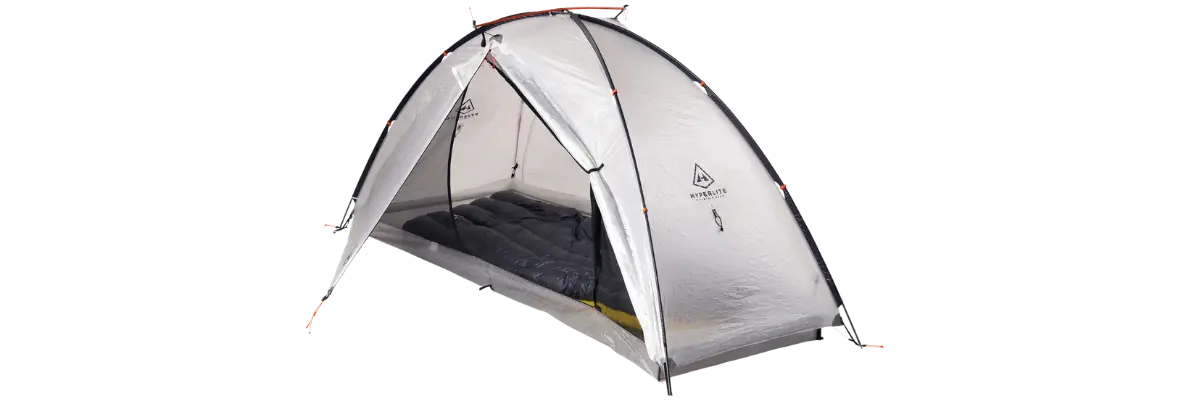
Specs at a Glance: CrossPeak 1
| Spec | Detail |
|---|---|
| Price (USD) | $825 |
| Trail Weight | 813 g / 28.7 oz (complete, excluding stakes) |
| Packed Weight | Not specified separately (manufacturer lists one combined weight of 813 g / 28.7 oz) |
| Capacity | 1 person |
| Floor Dimensions | 88 x 32 in at head, tapering to 29 in at foot (223 x 81 cm to 74 cm) |
| Peak Height | 42 in / 107 cm |
| Packed Size | Tent 8 x 6 x 5 in (20 x 15 x 13 cm); poles 15.25 x 2.25 x 2.25 in (39 x 6 x 6 cm) |
| Shelter Type | Freestanding, single-wall dome |
| DCF Canopy Weight | 0.55 oz/sqyd (DCF5) |
| DCF Floor Weight | 0.96 oz/sqyd (DCF10) |
| Number of Doors | 1 |
| Number of Vestibules | 1 (7.33 sq ft) |
| Wall Construction | Single-wall DCF with perimeter No-See-Um mesh and 20D Sil-Nylon external pole sleeves |
| Season Rating | 3-season |
| Trekking Poles Required | No (freestanding; optional for storm reinforcement) |
| Warranty | Guaranteed against manufacturing defects; 30-day returns |
| Lead Time | Ships in about 2 weeks |
Interior floor area is 18.6 sq ft. The tent is made in Mexico and includes a DCF tent stuff sack and a DCF pole stuff sack.
HMG CrossPeak 1 Design and Build Quality
This is where the price starts to make sense. The canopy uses 0.55 oz/sqyd Dyneema (DCF5), the gold standard for ultralight fly fabric, while the bathtub floor steps up to a burlier 0.96 oz/sqyd (DCF10) to handle abrasion and ground contact. Dyneema is the whole argument here: it is fully waterproof, PFC-free, does not absorb water, and does not sag when wet, so your pitch stays taut through a soaking night in a way nylon cannot match.
The structure is an X-pole design using three DAC Featherlite NFL 8.7mm aluminum poles, two mains forming the X plus a short cross pole that lifts the canopy. HMG deliberately chose aluminum over carbon because it is field-repairable with the included splint, a sensible call for a shelter you might take far from a resupply. The poles run through 20D Sil-Nylon external sleeves, which produce a consistent, repeatable pitch and keep tension off the DCF itself.
Hardware is a clear step above budget tents. You get Lawson Ironwire guyline, linelocs, ladder-lock tensioners, and high-visibility orange reinforcement tie-outs at the stress points, plus reflective binding at the pole intersections for setup in the dark. Magnetic door tiebacks round it out. The whole package reflects HMG’s reputation for bomber construction, and the materials, not marketing, are what justify the cost.
Setup and Pitch of the CrossPeak 1
For a one-person tent, the CrossPeak 1 lives larger than its footprint suggests. The floor is 88 inches long, which is the headline number for tall sleepers, and a 6-foot-3 tester reported room left over at his feet for stuff sacks and gear pods. The floor is 32 inches wide at the head and tapers to 29 inches at the foot, so it comfortably fits a regular or wide pad with margin to spare.
The 42-inch peak height is the real luxury feature. The rigid pole structure and external sleeves create genuine sit-up headroom, enough that testers described changing clothes and moving around freely, something trekking-pole shelters rarely allow. That said, the head-end wall is not steeply angled, so when you sit fully upright near the head you can brush the ceiling, which matters more in a single-wall tent because that surface may be damp with condensation.
Storage is adequate rather than generous. You get one vestibule at 7.33 sq ft for a pack and wet shoes, and the 18.6 sq ft interior is roomy enough that many users simply keep gear inside the bathtub alongside the pad. The honest caveat is that the interior floor area is smaller than several cheaper freestanding rivals, and with only one door and one vestibule, entry and gear access are less flexible than a two-door layout. Interior pockets are present but minimal.
Weather Performance of the HMG CrossPeak 1
Setup is one of this tent’s quiet wins. It is fully freestanding, so it stands on its own once the poles are seated, with no stakes required to get a usable shelter up. You insert the three poles into the external sleeves, clip the structure, and tension the corners with the ladder locks. Most users get a clean pitch in a couple of minutes, and the learning curve is genuinely beginner-friendly, which is unusual for a DCF shelter.
The freestanding design pays off on terrain where staked tents fail. On slickrock, granite slabs, sand, snow, or wooden platforms, you can pitch it where a trekking-pole tent simply will not hold, then pick it up and reposition it to find a root-free spot. You will still want a few stakes to anchor it against wind and to open the vestibule, but the tent does not depend on them for shape.
DCF’s no-stretch behavior is the thing to understand. Unlike silnylon, Dyneema does not sag overnight or stretch when wet, so a taut pitch stays taut, but it also means there is no give to absorb a sloppy setup. The external pole sleeves do most of the work of enforcing a consistent shape, which is why the pitch is so repeatable. Trekking poles are not required at all, though you can insert one in the vestibule on the windward side for extra storm stability. On lumpy or uneven ground the rigid frame handles things better than a tension-dependent shelter, since the poles hold the geometry regardless of where the corners land.
HMG CrossPeak 1 Value and Comparisons
This is a single-wall DCF tent, so weather performance splits cleanly into what it does brilliantly and what you have to manage. Rain shedding is excellent. Dyneema is 100% waterproof with no DWR to wear off, the floor uses a tougher DCF10 with raised bathtub walls, and because the fabric does not absorb water or sag, the canopy keeps its shape and tension through sustained rain. A prototype tester ran it through repeated hail storms on the Continental Divide Trail and reported it held up well.
Wind performance is strong for the weight. The X-pole structure plus external sleeves makes it noticeably sturdier than a trekking-pole shelter, and testers were surprised by how stable it stayed fully zipped in considerable Wyoming winds. For serious storms, you can reinforce it with a trekking pole in the vestibule plus extra guylines on the head and foot tie-out points, which is the closest thing this tent has to a dedicated storm mode.
Condensation is the honest weakness, and it is inherent to single-wall design rather than a flaw in execution. When warm interior air meets a cold canopy, moisture forms on the inside wall, and there is no second layer to keep it off you or your quilt. HMG fights this with a perimeter No-See-Um mesh strip plus two door vents and adjustable venting at the head and foot, which moves real air when conditions allow. Manage your site selection and venting and it is livable. Camp in a still, humid valley and you will wipe down walls in the morning.
CrossPeak 1 Value and Comparisons
There is no getting around it: at $825 this is one of the most expensive solo tents on the market, so the question is not whether it is cheap but whether its specific strengths beat the alternatives for your use case.
The closest philosophical peer is the Zpacks Free Zip, the other major freestanding single-wall DCF tent. The catch is that Zpacks does not sell a one-person Free Zip; the smallest is the 2P at roughly $899 and about 31.6 oz. If you want a freestanding DCF shelter and would value the extra room, the Free Zip 2P is the rival, but if you genuinely want a dedicated solo tent and the lowest freestanding DCF weight, the CrossPeak 1 wins on both fit and weight. Choose the CrossPeak if solo-specific sizing and the lightest freestanding option matter; choose the Free Zip 2P if you want more interior volume and two doors.
The value benchmark is the Durston X-Dome 1+ at around $379 and roughly 35 oz. It is a freestanding double-wall silpoly tent, so it is heavier and bulkier in some respects but costs less than half as much, manages condensation far better thanks to its second wall, and pitches fly-first to stay dry in rain. For most weekend backpackers and even many thru-hikers, the X-Dome is the smarter buy. The CrossPeak only pulls ahead if you specifically need DCF’s no-sag waterproofing and want to shave the weight.
The mainstream comparison is the Big Agnes Copper Spur HV UL1 at about $499 and roughly 32 oz, a refined double-wall freestanding tent with excellent livability. It is cheaper and more condensation-friendly, but uses nylon that sags when wet and weighs more.
Who should buy the CrossPeak 1 over these: the hiker who repeatedly camps on rock, sand, snow, or platforms where stakes will not hold, who wants the lowest possible freestanding weight, and who already understands and accepts single-wall condensation. Everyone else is better served by the X-Dome 1+ or Copper Spur.
CrossPeak 1 by Hyperlite Mountain Gear (HMG) FAQ
Is the HMG CrossPeak 1 waterproof in heavy rain?
Yes. The fly is 100% waterproof Dyneema with a tougher DCF floor and raised bathtub walls, and because Dyneema does not absorb water or sag, the pitch stays taut through sustained rain. Early prototype testing included repeated hail storms with no issues.
How does the CrossPeak 1 handle wind?
It is sturdy for an ultralight tent thanks to its X-pole structure and external pole sleeves, and testers found it stable in strong gusts when fully closed up. For severe storms you can add a trekking pole in the vestibule and deploy the extra guylines and tie-out points for meaningful added strength.
Is the CrossPeak 1 hard to set up?
No, it is one of the easier DCF tents to pitch. It is fully freestanding, so you seat three poles into external sleeves, clip the structure, and tension the corners, with most people pitching it in a couple of minutes and little learning curve.
Do I need trekking poles for the CrossPeak 1?
No. It is freestanding and uses included aluminum DAC poles, so trekking poles are never required. You can optionally add one in the vestibule for extra wind stability, but it is not part of the standard pitch.
Does the CrossPeak 1 get condensation?
It can, because it is a single-wall tent with no inner layer to separate you from moisture on the canopy. HMG includes perimeter mesh and multiple vents to reduce it, but in still, humid conditions you should expect some interior dampness and choose airy campsites when possible.
Will the CrossPeak 1 fit a tall person?
Yes. The 88-inch floor and 42-inch peak height give real length and headroom, and a 6-foot-3 tester found room to spare at the feet. The one caveat is that the head-end wall is not steeply angled, so very tall sleepers may brush the ceiling when sitting fully upright.
Is the CrossPeak 1 a 4-season tent?
No, it is rated as a 3-season shelter. It is storm-worthy and can take a beating in wind and hail, but it is not designed for heavy snow loading or deep winter conditions.
Do I need a footprint for the CrossPeak 1?
A dedicated footprint is generally unnecessary because the floor uses a tougher 0.96 oz/sqyd DCF. As with any DCF floor, clear sharp debris from your site, and note that punctures, if they happen, are easy to seal with DCF repair tape.