
Plex Solo Quick Take
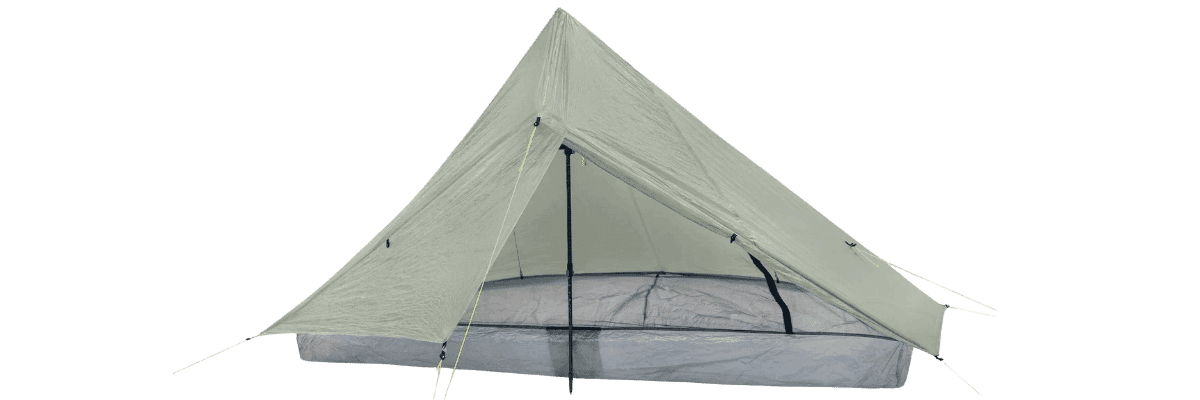
The Zpacks Plex Solo is built for solo thru-hikers and weight-obsessed fastpackers who want a real enclosed shelter at near-tarp weight. Its standout strength is the ratio of livable interior space to total weight, with a 100-inch floor and 52-inch peak height under 12 ounces in the Lite configuration. The main tradeoff is the price ceiling and the learning curve of a single-wall, non-freestanding DCF shelter that needs a careful pitch and a thoughtful campsite to perform.
Pros
- One of the lightest fully enclosed one-person tents on the market.
- Generous interior length for tall hikers.
- Storm doors with no zippers that can fail.
- Bio-based, PFAS-free Dyneema construction.
Cons
- $599 entry price stings.
- Single-wall design means condensation management is on you.
- Requires 6 to 10 stakes for a fully tensioned pitch.
- Needs a 52-inch trekking pole, which not everyone uses.
Bottom line: $599 USD, 12.3 oz / 348 g trail weight (Lite version), one person.
Specs at a Glance: Plex Solo
| Spec | Value |
|---|---|
| Price (USD) | $599 |
| Trail Weight (Lite) | 12.3 oz / 348 g |
| Trail Weight (Standard) | 14.6 oz / 413 g |
| Packed Weight | Approx 12.9 oz / 365 g (Lite, with stuff sack, repair tape, spare sliders) |
| Capacity | 1 person |
| Floor Dimensions (L x W center / W ends) | 90 x 38 / 28 in (229 x 97 / 71 cm) |
| Floor Length (full) | 100 in / 254 cm exterior |
| Peak Height | 52 in / 132 cm |
| Packed Size | 4 x 11 in / 10 x 28 cm rolled tight |
| Shelter Type | Single-wall, non-freestanding, trekking pole pyramid |
| DCF Canopy Weight (Lite) | 0.55 oz/sqyd |
| DCF Canopy Weight (Standard) | 0.75 oz/sqyd |
| DCF Floor Weight (Lite) | 0.75 oz/sqyd |
| DCF Floor Weight (Standard) | 1.0 oz/sqyd |
| Number of Doors | 2 overlapping storm doors, 1 mesh door |
| Number of Vestibules | 1 (front, 18.5 in / 47 cm depth) |
| Wall Construction | Single-wall DCF with perimeter mesh |
| Season Rating | 3-season |
| Trekking Poles Required | Yes, 1 pole at 52 in / 132 cm |
| Warranty | 2-year limited |
| Lead Time | Ships in 1 to 3 business days |
Zpacks Plex Solo Design and Build Quality
The Plex Solo is a single-pole pyramid built almost entirely from Dyneema Composite Fabric, which is what justifies the price tag and the weight figure. In the Lite configuration, you get a 0.55 oz/sqyd canopy and a 0.75 oz/sqyd floor. The Standard version steps up to 0.75 oz/sqyd on the canopy and 1.0 oz/sqyd on the floor for better opacity and abrasion resistance, at a cost of about 65 grams.
Seams are taped, not sewn-and-sealed. This is a significant build advantage of DCF construction: there is no seam sealing required out of the box, and any damage is patchable in the field with the included repair tape. The bonded tie-outs use Linelock V adjusters with bright yellow 1.6 mm Z-Line guylines that you can see in the dark.
The door design is one of the more thoughtful details. There are no zippers on the storm doors, which eliminates the single most common failure point on ultralight shelters. Instead, two overlapping DCF panels clip or roll out of the way. The mesh inner door uses a single YKK #3 rainbow zipper, and Zpacks ships two spare zipper sliders and 54 inches of repair tape with every tent.
The bathtub floor is recessed and tall, the perimeter is fully enclosed in 0.67 oz/sqyd mesh, and there’s a single small interior pocket at the front-center for a phone or headlamp. Construction is in the USA at Zpacks’ Florida facility.
Setup and Pitch of the Plex Solo
For a sub-pound shelter, the Plex Solo is surprisingly generous. The interior floor is 90 inches long with a 38-inch width at the center, tapering to 28 inches at the ends. That gives you 20.6 square feet of floor area and a 52-inch peak height that lets most users sit up fully without ducking.
For tall sleepers, this is the headline feature. A 6’2″ hiker can lie flat without the canopy touching head or feet, and Zpacks specifically notes that taller hikers can pop the side guylines higher using their trekking pole cups to gain even more room. If you’re over 6’4″, the Pivot Solo is a better call since it adds more length and overall headroom with zipper storm doors.
Side sleepers do fine in the center but lose some shoulder room toward the head and foot. The taper is noticeable.
Vestibule space is tight. The front vestibule is 18.5 inches deep, which fits a backpack and a pair of shoes, but you won’t be cooking under it without crawling out first. This is a real and recurring complaint from long-term users. Don’t expect Duplex-style vestibule comfort here, the Plex Solo trades that for weight savings.
There’s one interior pocket, and that’s it. No ceiling loops for a gear loft, no side pockets, no light diffuser pouch. If you want a lantern point, you’ll need to clip something to the peak hook yourself. This is a shelter that prioritizes weight over creature comforts, and the interior reflects that priority unapologetically.
Weather Performance of the Zpacks Plex Solo
The Plex Solo pitches with one trekking pole set to exactly 52 inches and somewhere between 6 and 10 stakes. Four stakes for the corners, one for the front, four for the side wall tie-outs, and an optional rear center stake make for the full storm pitch.
Setup time is around 3 to 5 minutes once you know it, but first-timers should plan on 10 to 15 minutes and a few practice pitches in the yard. The trick is staking the corners with slack first, raising the pole, then tensioning the corners and side walls in sequence. Get the corners wrong and the canopy looks like a wadded napkin.
Here is where DCF actually helps the beginner. Unlike silnylon, DCF does not stretch. Once you stake a taut pitch, it stays taut all night, even in rain. There’s no midnight re-tensioning ritual. That’s a real advantage for a single-wall shelter where slack canopy means more condensation contact and worse weather performance.
The downside is that DCF’s zero-stretch behavior is unforgiving on uneven ground. If you stake a corner six inches off-line, the canopy puckers and won’t self-correct. You’ll need to pull the stake and re-set it. On rocky or root-laced sites, expect to spend more time hunting for a clean stake plot than you would with a freestanding tent.
Required trekking pole length is the big asymmetric beginner gotcha. If your poles top out at 47 inches, this tent won’t pitch correctly. Verify your pole length before you buy. Zpacks sells a 52-inch carbon tent pole for $39.95 if you need one.
Zpacks Plex Solo Value and Comparisons
For an 11.8 oz shelter, the Plex Solo handles wet weather better than its weight suggests. The DCF canopy has a hydrostatic head rating around 15,000 mm and the floor around 20,000 mm, both well above what any rainstorm produces. Water beads and rolls off the canopy immediately, and because the seams are taped at the factory, there’s no slow leak through stitching.
Wind performance is the more interesting story. Third-party testing from Justin Outdoors put the Plex Solo against the Durston X-Mid Pro 1 in winds over 40 mph and the Plex Solo came out ahead, which is genuinely surprising given that DCF pyramids look more vulnerable than offset double-wall designs. Orient the tent with the overlapping storm door upwind (the Zpacks label marks the upwind corner), guy out all four side walls, and the tent can handle real weather.
Condensation is the honest weakness. This is a single-wall tent and physics is physics. In humid conditions or sites near water, you will get interior condensation on cold nights. The mitigation is real but not magic: the perimeter mesh runs the full bottom edge, the storm doors don’t fully seal at the top, and you can leave one or both doors clipped open for cross-ventilation. Multiple long-term reviewers report condensation is manageable in dry mountain environments and unavoidable in humid forests. Pack a bandana to wipe down the canopy in the morning and you’ll be fine.
The bathtub floor sits roughly 6 to 8 inches off the ground when pitched correctly, which keeps splash-up off your sleeping bag in driving rain. On hard-packed sites, Zpacks recommends pitching on leaves or pine needles when possible to soften splash impact.
Plex Solo Value and Comparisons
At $599, the Plex Solo sits at the upper end of one-person ultralight shelters, but it’s not the most expensive in its class. Three competitors are worth weighing.
Durston X-Mid Pro 1 ($659 typical). This is the most direct DCF rival. The X-Mid Pro 1 is a double-pole offset design with two doors and two vestibules, weighing around 16.4 oz. It pitches more easily because the rectangular footprint is forgiving on uneven ground, and the vestibule space is roughly double the Plex Solo. Choose the X-Mid Pro 1 if you want easier setup and more storage, choose the Plex Solo if you want the lower weight and a smaller footprint that fits into tighter campsites.
Tarptent Notch Li ($689). A DCF dual-pole double-wall design at about 19 oz. The double-wall construction substantially reduces condensation contact, which is the Notch Li’s whole pitch. Choose the Notch Li if condensation is your nightmare or you backpack frequently in the Pacific Northwest, choose the Plex Solo if weight savings of 7 oz matter more than condensation buffer.
Zpacks Pivot Solo ($699). The newer in-house alternative from Zpacks. Slightly more headroom, zipper storm doors, slightly more weight (around 14.5 oz Lite). Choose the Pivot Solo if you’re over 6’3″ or want zippered doors, choose the Plex Solo for the lower weight and lower price.
Who should choose the Plex Solo over these alternatives? The buyer profile is narrow but real: solo thru-hikers chasing every ounce, fastpackers running long days, and weight-conscious backpackers who already use 52-inch trekking poles and camp primarily in dry to moderately humid environments. If you don’t fit that profile, one of the alternatives above is probably a better buy.
Plex Solo by Zpacks FAQ
How does the Plex Solo handle heavy rain?
Very well, with the right pitch. The taped seams and high hydrostatic-head DCF mean rain does not penetrate the canopy or floor. The recessed bathtub floor keeps splash-up off your gear. The main caveat is that you want both doors clipped down in heavy rain, which limits ventilation and increases condensation.
Can the Plex Solo handle high winds?
Yes, within reason. Independent testing has shown it holds up in winds over 40 mph when fully guyed out with the storm door oriented upwind. It is not a mountaineering shelter and is not rated for extended exposure to sustained high winds or snow loading.
Is the Plex Solo hard to set up for beginners?
It has a learning curve. Plan on 5 to 10 practice pitches in your yard before relying on it in the field. Once you understand the corner-first staking sequence, it goes up in 3 to 5 minutes. DCF’s no-stretch behavior actually helps beginners because the pitch holds overnight.
Is the Plex Solo a 4-season tent?
No, it’s a 3-season shelter. The full mesh perimeter and minimal storm doors mean drafts and spindrift in winter conditions. It will handle light frost and shoulder-season cold snaps, but it’s not built for sustained snow loading or winter mountaineering.
How tall can you be and still fit in the Plex Solo?
The 90-inch interior floor length comfortably fits hikers up to about 6’2″ with room to spare. Hikers from 6’2″ to 6’4″ can fit but may want to prop the side guylines higher. Anyone over 6’4″ should look at the Pivot Solo or Altaplex instead.
Does the Plex Solo need a footprint or groundsheet?
Not strictly. The 0.75 or 1.0 oz/sqyd DCF floor is durable enough to use directly on cleared ground. Many users add a Polycro or Tyvek groundsheet for extra puncture insurance and easier site cleanup, but it is not required for normal use.
How bad is condensation in the Plex Solo?
Moderate and manageable in most conditions, unavoidable in humid or near-water campsites. The perimeter mesh and clip-open storm doors provide better ventilation than fully sealed single-wall shelters, but expect to wipe the canopy down on cool, humid mornings. This is the inherent tradeoff of single-wall design.